| Deshae Betts, IFBB Pro | Getting Started | 7 min read
Gym Anxiety is Normal: How to Feel Confident on Day One
Feeling nervous about going to the gym? You're not alone. Here are practical strategies to overcome gym anxiety and walk in with confidence.
Gym anxiety is extremely common — studies suggest the majority of new exercisers experience some form of it, and it has nothing to do with weakness or lack of motivation. The good news is that it’s temporary and highly manageable. Practical strategies like visiting during off-peak hours, walking in with a written workout plan, and committing to the 5-visit rule (where the gym starts feeling familiar by your fifth session) help gym anxiety fade fast for most people.
You’re Not the Only One
Gym anxiety — sometimes called “gymtimidation” — is one of the most common reasons people avoid starting a fitness routine. Research suggests that a significant portion of people feel some level of anxiety about going to a gym.
The fear is real, even if it’s not rational. You worry everyone is watching you. You don’t know how to use the equipment. You feel like you don’t belong because you’re not fit enough yet. These feelings are normal, and almost every regular gym-goer felt them at some point.
The good news: gym anxiety fades fast once you start showing up. In fact, exercise itself is one of the most effective ways to reduce anxiety according to the Anxiety and Depression Association of America. Here’s how to speed up that process.
What Gym Anxiety Actually Looks Like
It’s not just “being a little nervous.” Gym anxiety can show up as:
- Driving to the gym and sitting in the parking lot, then driving home
- Spending an hour researching workouts but never actually going
- Only using cardio machines because they’re in a less visible area
- Going at extremely off-peak hours to avoid people
- Avoiding entire sections of the gym (like the free weight area)
- Wearing specific clothes to avoid attention
If any of these sound familiar, you’re dealing with gym anxiety. And you can work through it.
Why Nobody is Actually Watching You
Here’s a truth that experienced gym-goers understand: everyone in the gym is focused on themselves. They’re thinking about their next set, their music, their work stress, or what they’re eating for dinner. They’re not evaluating your form, your weight selection, or your fitness level.
The rare exception — someone who actually judges beginners in a gym — is universally disliked by every other gym member. That behavior is not tolerated in any good gym.
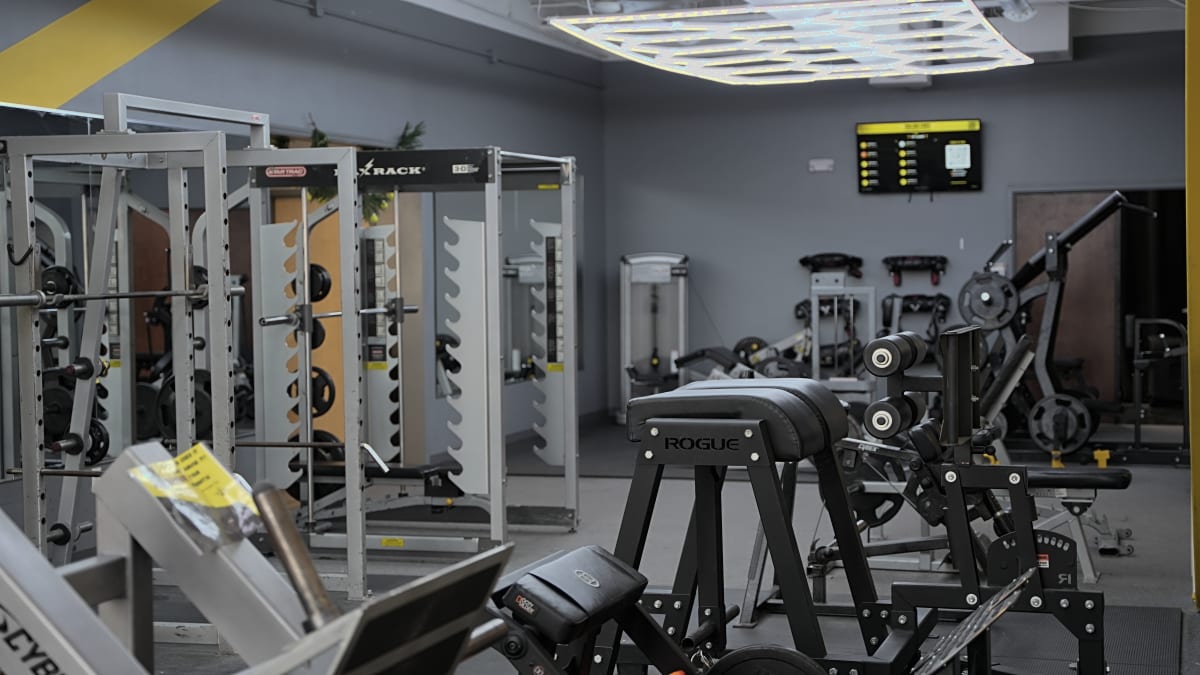
At locally owned gyms like Total Body Fitness, the atmosphere tends to be more welcoming than large commercial chains. Fewer people, more familiar faces, and an owner who cares about member experience.
Practical Strategies That Work
1. Visit During Off-Peak Hours
Most gyms are quietest during:
- Mid-morning (9-11 AM) on weekdays
- Early afternoon (1-3 PM)
- Late evening (after 9 PM)
- Weekend mornings
With 24-hour access, you can train at 11 PM or 5 AM when you might have the entire gym to yourself. This is a legitimate strategy for building comfort before transitioning to busier times.
2. Have a Plan Before You Walk In
Anxiety spikes when you don’t know what to do next. Walking around aimlessly looking for equipment makes you feel conspicuous.
Write down your workout before you go. Even a simple list: “Treadmill 10 min, chest press 3x12, lat pulldown 3x12, leg press 3x12.” When you know exactly what you’re doing, you move with purpose — and that looks and feels confident.
Check out our beginner’s guide for a complete starter routine.
3. Start With Machines
Machines guide your movement, have instructions printed on them, and are less intimidating than a barbell. There’s no wrong way to use a leg press. Start there, build confidence, then expand to free weights when you’re ready — our beginner’s guide to strength training walks you through the core barbell lifts step by step.
4. Use Headphones
Music creates a personal bubble. It signals to others that you’re in your zone, and it reduces your awareness of the surrounding environment. Put on a playlist that energizes you and focus on your workout.
5. Bring a Friend
If someone you know already goes to a gym, ask to tag along. Having a familiar face eliminates the “I’m alone in a strange place” feeling. Many gyms, including Total Body Fitness, offer companion options that make this affordable.
6. Book a Single Training Session
A personal training session does double duty: you get a guided introduction to the equipment AND you have someone by your side the entire time. After one session with a trainer, the gym feels familiar instead of foreign.
7. Reframe the Narrative
The story in your head is: “Everyone will judge me because I’m out of shape and don’t know what I’m doing.”
The reality: “A new person in the gym is doing something most people only talk about. That takes guts.”
Every person in that gym respects the fact that you showed up. The ones who’ve been there longest respect it the most, because they remember how hard that first day was.
Signs of a Gym That Reduces Anxiety
Not all gyms are equal when it comes to welcoming new members:
- Uncrowded — Lower member-to-equipment ratio means less waiting and less feeling watched
- Clean and organized — A well-maintained space feels more inviting
- Friendly staff — People who greet you and are available to answer questions
- No judgment culture — This should be felt, not just stated on a sign
- 24-hour access — The option to go when nobody else is there
- Private training options — One-on-one sessions without an audience
The 5-Visit Rule
Commit to going 5 times before you decide whether the gym is for you. The first visit is the hardest. The second is slightly easier. By the fifth visit, you’ll know where things are, have a routine forming, and recognize a few faces.
Most people who push through those first 5 visits become regular gym-goers. The anxiety doesn’t disappear instantly — it fades with repetition.
Frequently Asked Questions
Is it normal to feel anxious about going to the gym?
Absolutely. Gym anxiety is one of the most common barriers to starting a fitness routine. It affects beginners and experienced exercisers alike, and it often shows up as avoiding certain areas of the gym, sitting in the parking lot without going in, or only using cardio machines. Recognizing it as a normal response — not a personal failing — is the first step toward moving past it.
What is the best time to go to the gym to avoid crowds?
Most gyms are quietest mid-morning (9-11 AM), early afternoon (1-3 PM), and late evening (after 9 PM) on weekdays. Weekend mornings also tend to be lighter. If your gym offers 24-hour access — like Total Body Fitness with 24/7 keycard entry — you can train at 5 AM or 11 PM and often have the entire facility to yourself.
How long does gym anxiety last?
For most people, gym anxiety decreases significantly within the first 3-5 visits. By the fifth session, you’ll know where the equipment is, have a routine forming, and start recognizing familiar faces. The anxiety doesn’t vanish overnight, but it fades with each visit as the environment becomes familiar.
How do I get over gym intimidation?
Start with a written workout plan so you know exactly what to do when you walk in — aimless wandering is what makes you feel conspicuous. Begin with machines (they have instructions on them and guide your movement), wear headphones to create a personal bubble, and consider booking a single personal training session so a professional can walk you through the equipment. A trainer eliminates the guesswork and makes the entire gym feel familiar after just one visit.
You Belong Here
Gyms exist for people who want to improve their health and fitness. That includes people who can deadlift 500 pounds AND people who’ve never touched a barbell. You don’t need to earn the right to be there. You just need to show up.
View membership options at Total Body Fitness, or call (816) 403-4910. We’re open 24/7.
Written by Deshae Betts, IFBB Pro and owner of Total Body Fitness in Lee’s Summit, MO. She coaches athletes from first-time gym members to competitive bodybuilders and holds certifications in personal training and nutrition.