
| Deshae Betts, IFBB Pro | Strength Training | 9 min read
How to Squat with Proper Form (Step-by-Step Guide)
The squat is the most important exercise you can learn. Here's exactly how to do it right — from bodyweight to barbell — with common mistakes to avoid.
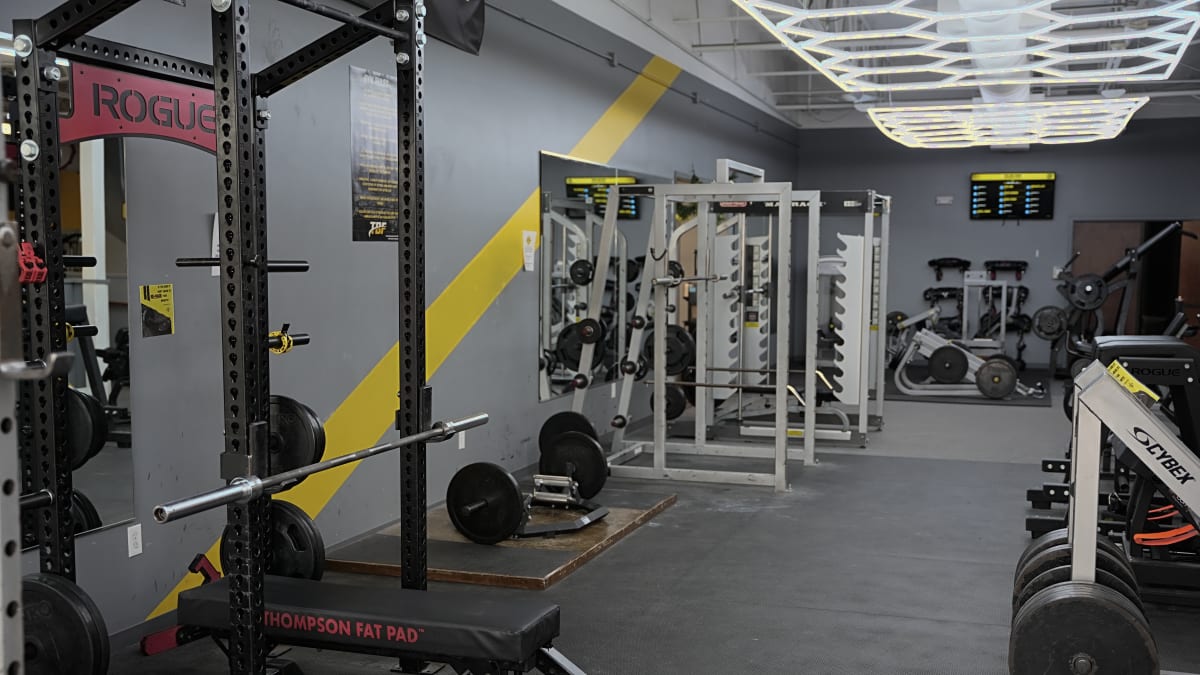
The squat builds more total-body strength than any other single exercise. It trains your quads, glutes, hamstrings, core, and spinal erectors simultaneously — and the movement pattern translates directly to real life (sitting down, standing up, picking things up). Master three variations in order — bodyweight, goblet, and barbell back squat — and you’ll have a foundation that serves every fitness goal you’ll ever have.
Why the Squat Matters
Half your body’s muscle mass lives below your waist. The squat trains all of it in one movement. The NSCA confirms the back squat as one of the most effective exercises for lower-body strength, power, and athletic performance. Beyond raw strength, squats improve bone density, ankle/hip mobility, and core stability that protects your lower back in everyday life.
This guide covers three squat variations in the order you should learn them. If you’re brand new to lifting, start with our complete beginner’s guide to strength training for the bigger picture, then come back here for squat-specific instruction.
Variation 1: Bodyweight Squat
The bodyweight squat teaches the movement pattern without external load. Master this before adding weight.
Setup: Feet shoulder-width apart, toes pointed out 15-30 degrees. Arms extended in front for counterbalance or hands clasped at chest height. Chest up, core engaged.
Execution:
- Push your hips back as if sitting into a chair. Weight stays on mid-foot and heels — never toes.
- Bend your knees tracking over your toes (pointed slightly outward, same direction as your feet).
- Descend until your hip crease reaches the top of your knee (parallel). Go deeper if mobility allows.
- Drive up through your whole foot. Squeeze glutes at the top, stand fully upright.
Breathing: Inhale on the way down, exhale on the way up.
Target: 3 sets of 15 reps with controlled tempo (2 seconds down, pause, 2 seconds up). When all 3 sets feel solid with full depth, move to goblet squats.
Variation 2: Goblet Squat
The goblet squat adds load while keeping weight in front of your body, naturally encouraging an upright torso and proper depth. It’s the best bridge between bodyweight and barbell squatting.
Setup: Hold a dumbbell or kettlebell vertically at chest height, cupping the top with both hands, elbows pointed down. Feet shoulder-width or slightly wider, toes out 15-30 degrees. Chest tall, core braced.
Execution:
- Push hips back and down with the dumbbell tight to your chest. The front-loaded weight acts as a counterbalance — it should make the squat feel more stable.
- Sink hips between your knees. Drive your elbows inside your knees at the bottom to open your hips and stay upright.
- Stand up through heels and mid-foot. Squeeze glutes at the top. The dumbbell stays at chest height — if it drops forward, you’re losing your brace.
Breathing: Inhale and brace at the top. Hold through the descent. Exhale past the sticking point on the way up.
Target: 3 sets of 10-12 reps. Start with 15-25 pounds and add 5 pounds when all reps are clean. When you’re goblet squatting 40-50+ pounds comfortably, transition to the barbell.
Variation 3: Barbell Back Squat
The barbell back squat allows the heaviest loading and the most progressive overload of any squat variation. Learn it with just the bar (45 pounds) before adding plates.
Setup: Set the bar in the rack at mid-chest height. Step under and position it across your upper traps (high-bar, best for beginners). Grip slightly wider than shoulder width, pull elbows down and back to create a muscle shelf. Unrack by standing straight, take 2-3 small steps back. Feet shoulder-width or wider, toes out 15-30 degrees.
Execution:
- Brace: Deep breath into your belly, lock your core — like you’re about to get punched.
- Descend: Push hips back and bend knees simultaneously. Chest up, gaze forward. Control the speed — 2-3 seconds down.
- Hit depth: Hip crease at or below the top of your knee. Parallel is the goal for most people.
- Drive up: Push the floor away through your whole foot. Think “push your back into the bar.” Exhale past the sticking point.
Breathing: Barbell squats use the Valsalva maneuver — deep belly breath at the top, brace hard, hold through the descent and bottom, exhale after the sticking point. This creates intra-abdominal pressure that stabilizes your spine under load.
Common Mistakes and How to Fix Them
Knee Cave (Knees Collapsing Inward)
Your knees buckle inward during the descent or drive. This usually means weak hip abductors (outer glutes) or a stance that’s too narrow. Fix: Actively push your knees out over your toes. Cue: “spread the floor with your feet.” Banded squats and lateral band walks strengthen the root cause.
Butt Wink (Lower Back Rounding at the Bottom)
Your pelvis tucks under at the bottom, rounding your lower back. This comes from limited hip mobility, squatting deeper than your anatomy allows, or losing core tension. Fix: Squat to the depth where your lower back stays neutral — and stop there. Butt wink at extreme depth is partly anatomical (hip socket shape). Never chase depth at the expense of a neutral spine.
Excessive Forward Lean
Your torso tilts far forward, turning the squat into a good morning. Usually caused by weak quads or tight ankles. Fix: Cue “chest up” and “drive your back into the bar” out of the bottom. If ankle mobility is the limiter, place small plates (2.5 or 5 lb) under your heels or invest in weightlifting shoes with a raised heel.
Heels Rising Off the Floor
Your heels lift during the descent, shifting weight onto your toes. The cause is almost always limited ankle dorsiflexion. Fix: Heel wedges or plates under your heels for an immediate solution. Long term, perform daily wall ankle stretches (knee to wall, 3x30 seconds per side) and banded ankle distractions. Weightlifting shoes with a 0.75-1 inch heel are a permanent fix many lifters use.
Depth and Mobility
The standard for a full squat is hip crease below the top of the knee. For general fitness, parallel (thighs parallel to the floor) is sufficient. A study in the Journal of Strength and Conditioning Research found that full-depth squats produced greater glute activation compared to partial squats — but depth is individual. Your hip socket anatomy, femur length, and ankle mobility all affect how deep you can go with a neutral spine. The rule: go as deep as you can with a flat back and heels on the floor. A solid parallel squat beats a deep squat with a rounded back.
If you can’t hit depth with good form, it’s almost always a mobility issue. The two most common restrictions:
Ankle mobility — Test by placing your toes 4 inches from a wall and trying to touch your knee to the wall without lifting your heel. Fix with daily wall ankle stretches (knee-to-wall, 3x30 seconds per side) and calf foam rolling. Expect improvement in 4-6 weeks.
Hip mobility — Test by lying on your back and pulling one knee to your chest. If your thigh can’t pass 90 degrees without your lower back lifting, your hip flexion is limited. Fix with 90/90 hip stretches, deep bodyweight squat holds (30-60 seconds at the bottom), and pigeon stretch.
The Progression Pathway
- Bodyweight squat — 3x15 with full depth, controlled tempo. Time: 1-3 weeks.
- Goblet squat — 15-25 lbs up to 40-50 lbs for 3x10-12. Time: 4-8 weeks.
- Barbell back squat — Start with just the bar (45 lbs). Add 5-10 pounds per week. Time: ongoing.
Don’t rush it. A solid bodyweight and goblet squat foundation makes the barbell transition smoother and safer.
When to Get a Form Check
Consider a personal training session for a form check if you can’t hit parallel without your heels rising or back rounding, if you experience knee pain, or if you’re about to start adding significant weight. Even one session focused on squat form corrects habits that would otherwise limit progress for years. At Total Body Fitness, we offer free training consultations. For a full breakdown, read our guide to personal training in Lee’s Summit.
Frequently Asked Questions
Are squats bad for your knees?
No — properly performed squats strengthen the muscles, tendons, and ligaments around the knee. A meta-analysis in Sports Medicine found that deep squats do not increase knee injury risk and may improve knee stability. Pain during squats usually signals a form issue (knee cave, narrow stance, poor warm-up) rather than a problem with the exercise itself. Reduce weight, check your form, and see a professional if pain persists.
Should my knees go past my toes?
Yes. The old “never let your knees pass your toes” advice came from a misinterpretation of a 1970s study and has been thoroughly debunked. Restricting forward knee travel actually increases stress on the hips and lower back. Let your knees travel naturally — what matters is that they track in line with your toes and don’t collapse inward.
How much weight should I start with?
Bodyweight only. Build to 3x15 with full depth, then add a 15-25 pound goblet squat. Progress to 40-50 pounds, then transition to a barbell (45 pounds, no added plates). Add 5-10 pounds per session as form permits. The strongest squatters in the world all started with an empty bar.
What’s better — front squat or back squat?
For beginners, the back squat. It allows heavier loading, emphasizes the glutes and hamstrings, and is more forgiving of mobility limitations. The front squat demands more quad and core strength plus greater ankle mobility — add it later once your back squat is solid. Our guide on free weights vs. machines covers how barbell movements compare to machine alternatives.
Start Squatting This Week
The squat is a skill that improves with practice. You don’t need perfect mobility, perfect genetics, or perfect confidence — you need to start. Begin with bodyweight squats, focus on the cues in this guide, and add complexity as you earn it.
Memberships at Total Body Fitness start at $55/month with 24/7 keycard access and no enrollment fees. Come in, grab a squat rack, and get to work. Call (816) 403-4910 or stop by 3680 NE Akin Dr in Lee’s Summit.
Written by Deshae Betts, IFBB Pro and owner of Total Body Fitness in Lee’s Summit, MO. She coaches athletes from first-time gym members to competitive bodybuilders and holds certifications in personal training and nutrition.


